


Why Longevity Needs a New Model
What is stopping us from making meaningful improvements to longevity?

The Limits of the Current Paradigm: Why Longevity Needs a New Model
For decades, science has tried to understand aging and how to slow it. Researchers have mapped genes, tracked molecules, and extended the lives of tiny creatures in labs, yet reliably slowing or reversing human aging remains elusive.
This isn't for lack of effort. Brilliant minds have worked tirelessly, often inspired by promising discoveries in mice. But as the years pass and those results continue to fall short in humans, a quiet question that emerges is :
“Have we been looking in the right place all along?”
Why the mouse model fails
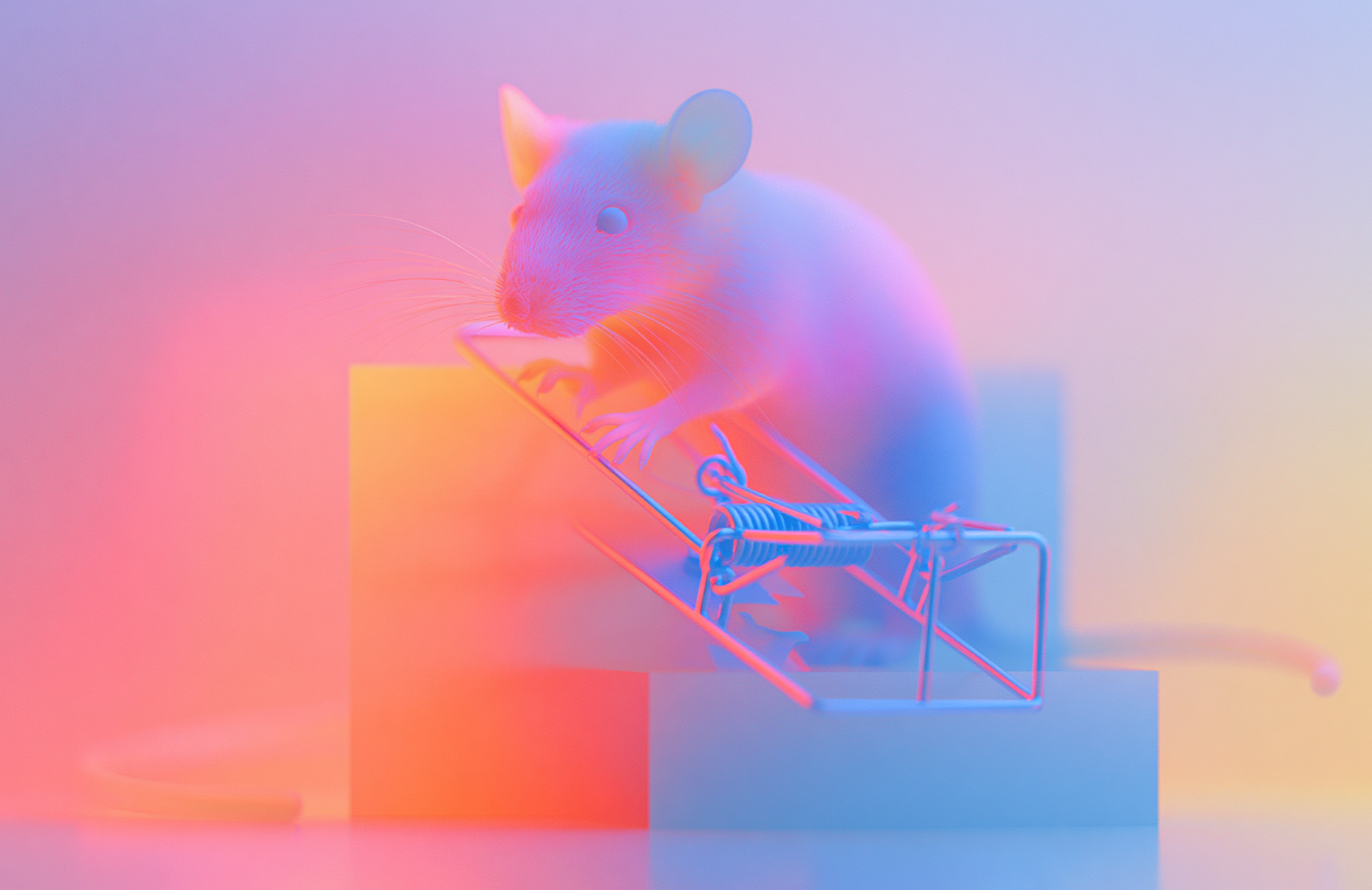
Mice are the go-to lab animals. We test drugs on them, change their diets, alter their genes, and time after time, we see them live longer. Yet, these interventions seldom work in humans. Mice are short-lived animals that evolve under entirely different pressures, reproduce quickly, and age differently from us.
As evolutionary biologist Steven Austad puts it:
“The mouse, the worm, and the fly are all demonstrably unsuccessful at aging. Humans are already pretty good at it.”
This means treatments that help mice may only address their limitations, not universal mechanisms of aging. Drugs that cured Alzheimer’s in mice often fail in humans. Promising cancer therapies work in rodents but show little impact on people. While these studies have paved the way for genetic editing and drug discovery, the mouse model has limits when it comes to human longevity.
Why Human Studies Are So Hard
“If mice don’t work, why not just study humans directly?”
This is a question that keeps recurring, but it's not as easy as it seems. Human studies take decades, cost a lot of money, and require enormous datasets to track real aging. To save time, scientists rely on biomarkers of aging, which are basically signs in the body meant to track aging. But these biomarkers often say different things. One test might say you’re biologically younger; another might say nothing has changed. So, instead of clear answers, you get mixed signals that make it hard to know what really works.
In simple words, we’re stuck with a system that’s slow, expensive, and often confusing. If the goal is to help humans live longer, healthier lives, then we need models that reflect our complexity, our environment, our diets, our emotional/social bonds, and the way we actually live.
Why Dogs Matter
Dogs are companions who share our environment, habits, and even our health challenges. They eat similar food and age alongside us. Like humans, they often experience arthritis, cancer, and cognitive decline. In many cases, their responses to treatments mirror ours more closely than lab mice ever could.
Unlike other animals in sterile labs, dogs live full, complex lives. They move, play, form relationships, and navigate the world with us, making them uniquely valuable for longevity research.
Researching aging in dogs offers two major advantages:
- It’s faster and more affordable.
Because dogs live shorter lives, we can observe the long-term effect of interventions in just a few years, and not decades. - It’s emotionally compelling.
People love their dogs. When we see visible improvements in their health and lifespan, like living longer, healthier lives, we pay attention and are motivated to care, invest, and act.
In that way, dogs are both scientific and emotional bridges between the lab and human life. If we can extend the healthy years of our closest companions, we just might unlock the knowledge to do the same for ourselves.
Decentralized science (DeSci) aims to reimagine research as a collaborative and open process.
Dog Years DAO is part of this new movement: building a network where scientists, dog parents, and innovators collaborate openly to advance canine longevity. By pooling resources and sharing findings, we help turn what used to be private experiments into public progress. It’s a model built on transparency, trust, and shared purpose, one that sees every participant as part of the discovery process.
A New Way to Look at Longevity
The traditional model of longevity research is built around lab mice and isolated experiments, and while it has brought us this far, it’s no longer enough.
By learning from our dogs and harnessing the power of decentralized science, we can create a model that’s more open, more human, and more effective, one that values not just data, but lived experience and compassion. Because when we help our dogs live longer, healthier lives, we gain something too, which is more time, more connection, and insight into what it means to age well together.


Keep up with the latest in canine longevity.
Get updates on trial enrollment, research breakthroughs, and new ways to get involved. No spam — just meaningful science, shared stories, and occasional dog pics.


